

Giving a bottle is more than just feeding. It is also a moment of contact and togetherness. With cue-based feeding, you watch your child's signals closely. Your child shows when they are ready for the bottle, when they need a moment's rest and when they have had enough. By following your child's pace, you help make drinking safe, pleasant and relaxed.
For babies born at term, drinking usually comes naturally. Each suck and swallow is followed by a breath.
Babies born prematurely or babies who are ill
Babies born too early (prematurely) or babies who are ill often find learning to drink more difficult. These babies:
- need more time to suck and swallow
- need longer pauses to catch their breath.
Drinking takes more energy. The rhythm of sucking, swallowing and breathing is less well coordinated. Your child needs to pause for breath more often and for longer.
When is your child ready to feed?
- Your child is awake and searching for the nipple or teat.
- Your child has enough energy to hold their hands up to their chest.
- Gently stroke the cheek towards the corner of the mouth.
 Your child opens their mouth and draws the nipple or teat in themselves.
- Never push the nipple or teat into the mouth!
How should your child be positioned?
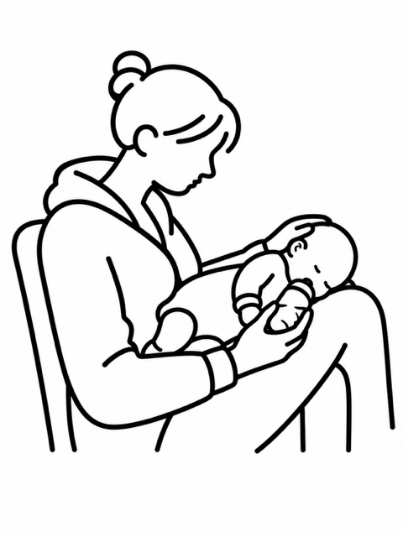
Choose a sitting position that is comfortable for you.
Your child feeds well lying on their left side.
Please note:
- the baby's neck, head and trunk should be in
one straight line - the baby's bottom against your tummy
- keep the head slightly higher than the hips.
- support the infant's shoulders and hands towards
the midline.
Stress signals during feeding
 Your child can show that it is all becoming too much. We call these stress signals. Your child is then experiencing stress, because sucking, swallowing and breathing together do not yet go well. Interrupt or pause the feed when the infant shows one or more of
the following stress signals:
- noisy feeding (clicking, squeaking or clacking sounds)
 frowning, raised eyebrows and/or wide-open eyes
- splayed fingers (stop hand)
- head tilted back or turning away
- yawning
- restless movement of arms and legs
- gagging, choking / coughing
- rapid or audible breathing
- change in skin colour (blue, pale, greyish).
It is important that feeding is a pleasant experience, as this is how your child learns.
This is how you give a pause, we call this pacing
- Tilt the bottle (keeping the teat in the mouth) so that no milk remains in the teat.
- Your child can suck a few more times to swallow any remaining milk.
- Does your child start sucking again after a breathing pause? Refill the teat with milk and continue.
Duration of the Feed
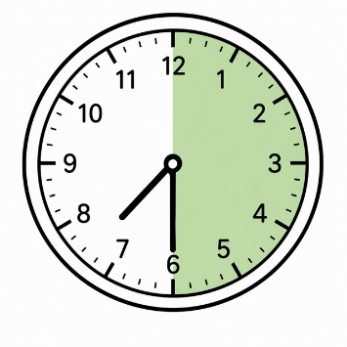
We allow a maximum of 30 minutes per feed. This includes changing the nappy (before or halfway through the feed). This way, your child does not become too tired.
Stop earlier if stress signals or tiredness increase.
Your child is too tired when
- stress signals increase
- the arms hang limply alongside the body
- milk dribbles from the corner of the mouth
- your child becomes tired and falls asleep.
Consult the responsible physician or speech and language therapist
|
Image credits: Amsterdam UMC 2026